


Journalism is in trouble. Just ask Andy Sachs.
At least, that’s what Anne Hathaway’s character in the recent popular movie, “The Devil Wears Prada 2,” says. At the start of the movie, Sachs gives a speech to her fellow journalists at an awards gala after being honored for outstanding writing. But instead of thank-yous and appreciation, she reveals that she and the rest of her team have been fired – by text – after a corporate buyout.

Journalism, she says, is dying because corporations keep taking over the newsrooms. “Journalism still f—ing matters!” she declares passionately.
One might say the scene is just for entertainment, a plot device. But journalism in the real world is changing.

On one hand, the outlook is not good. There are severe declines in print journalism, budget cuts, layoffs, even news deserts, where there are no news outlets. However, there is potential for a brighter outlook for the state of journalism. News professionals cite the emergence of student journalism programs and express optimism for the future.
Roughly four in 10 newspapers have disappeared between 2005 and 2025, and around 50 million Americans have limited or no access to a local print newspaper, according to the Medill School of Journalism at Northwestern University in Illinois.
Print journalism is changing. Physical print editions are disappearing. Newspapers have gone digital, many putting up paywalls to earn revenue. Traditional radio news is declining significantly, leaving people with fewer news choices. Instead, people are switching to podcasts and websites for information.
The emergence of social media, influencers and artificial intelligence has corresponded to declining trust in reporters and a rise in fake news, according to Statista, a market data and research company.
“According to a survey held in May 2026, just under half of all responding adults said they believed they saw false or misleading information online every day,” Statista said. “Just 1% said they never saw false news.”
A Pew Research Center analysis found, “A majority of Americans (57%) express low confidence in journalists to act in the best interests of the public.”

That included 40% who said they had “not too much confidence” and 17% who said they had “none at all.” “By comparison, 43% of adults say they have a great deal or a fair amount of confidence in journalists,” the report said.
But there is a light in what seems to be quickly growing darkness. Many professionals who have watched the industry change from printing and newspaper boys to the internet and electronic media believe journalism won’t go extinct, just change as society evolves.
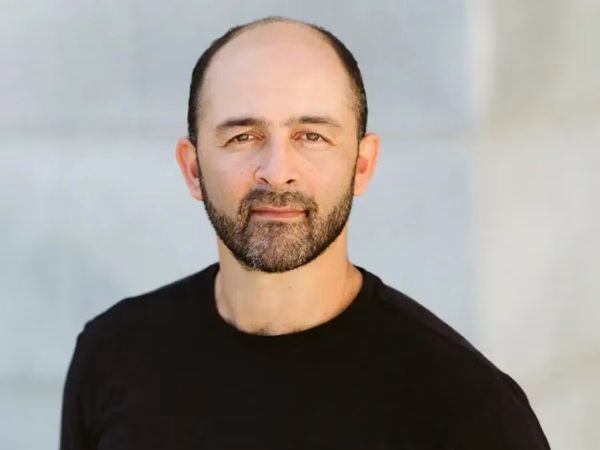
“What is YouTube if not another form of video? What are podcasts if not another form of radio? What is digital publishing if not another form of print journalism, right?” said Cyrus Farivar, a journalist, editor, and author who is deputy local editor at the East Bay Times. He has worked for the San Francisco Standard, Forbes, NBC News and Ars Technica. “These things sort of evolve from one another and so I don’t think journalism as an idea will ever go away.”

Erin Schneider is a former high school newspaper adviser who ran the journalism program at Redwood High School in Larkspur, which produces the Redwood Bark. She now runs a writing class – with, she says, a waiting list– in her Journalism Resource Network, and she agrees with Farivar.
“As humans, we’re wired to support each other and depend on each other and share lived experiences,” she said. “And so to me, that’s what journalism is. Journalism is, you know, showcasing stories of people who have learned from failure.”
“A lot of methods of storytelling, like print newspapers, are already on the fringe,” she said. “So eventually there might be a day where we have little to no print editions of the newspaper. But journalism as a whole is not going away. It will just continue to evolve.”
Student journalism programs are helping slow the decline in the news industry.
Programs such as Contra Costa County Youth Journalism, for which this story was written; the Bay Area Writing Project at the University of California, Berkeley; the Youth Journalism Initiative at the nonprofit, nonpartisan news site CalMatters; and the Youth Media Challenge at KQED are providing students with experience, encouraging their interest in writing, and in some cases filling the void with stories overlooked by mainstream publications.
“There’s nothing more rewarding than telling other people’s stories,” said Michael Levitin, chair of the Journalism Department at Diablo Valley College in Pleasant Hill. “If you want to get rich, pick another career. If you want a meaningful and exciting and always fascinatingly new work to get you up each day, consider a life of journalism. We need truth and storytellers now more than ever.”
This story originally appeared in CCYJ.
